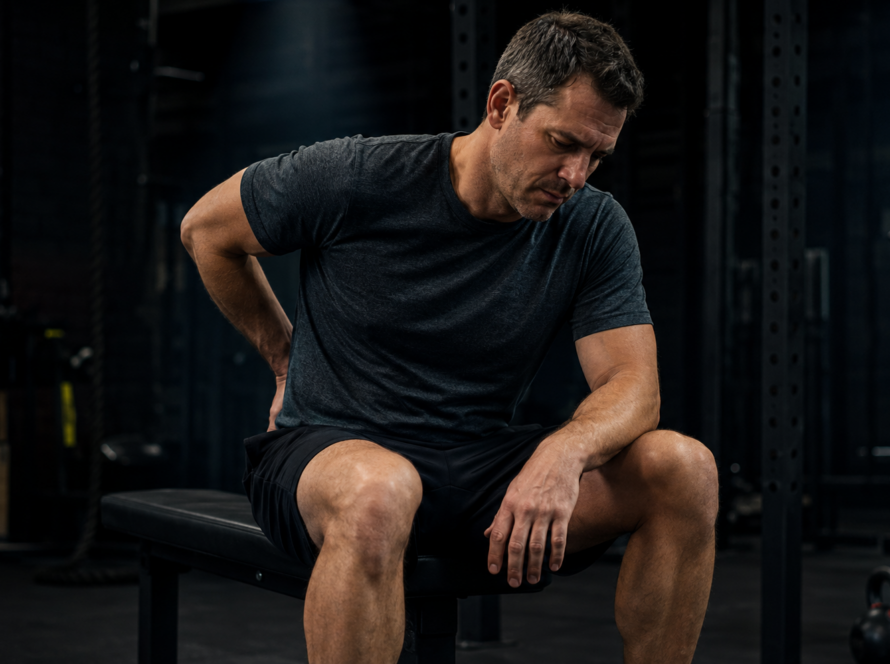
If you train hard, sleep enough, and still wake up feeling like you never fully recovered — the problem probably isn’t your effort. It’s that resting and recovering are not the same thing, and most people have only ever done one of them.
Rest is passive. Recovery is structured. Rest removes the stimulus. Recovery actively rebuilds from it. And when your body isn’t getting the second one — no matter how much of the first one you get — you stay in a state of accumulated fatigue that slowly erodes performance, mood, and resilience.
At WLF Club in Fort Worth, this is one of the most consistent findings we see: people putting in serious training effort and leaving most of the result on the table because the recovery infrastructure simply wasn’t there.
Why Rest Alone Doesn’t Equal Recovery
Here’s the fundamental biology most training plans skip over: the training session is not where adaptation happens. Recovery is.
Training is the stimulus — it breaks tissue down, depletes energy systems, and places stress on the body. The adaptation — getting stronger, faster, more resilient — happens during the recovery window that follows. If that window is filled only with passive rest, the body gets a partial signal to rebuild. But it doesn’t get the inputs that accelerate or complete that process.
Think of it this way: training is the invoice. Recovery is the payment. Rest just… delays the bill.
High performers who train five days a week, sleep seven hours, eat reasonably well — and still feel like they’re maintaining instead of progressing. Not because they’re not working hard enough. Because the recovery side of the equation is effectively zero.
What Active Recovery vs Rest Actually Looks Like
Active recovery isn’t just light movement or an easy walk. It’s a deliberate set of inputs designed to support what the body needs to rebuild efficiently:
Nervous System Downregulation
Hard training drives the sympathetic nervous system — the fight-or-flight system — into a sustained elevated state. Active recovery works to bring that back down through breathwork, contrast therapy, and parasympathetic-activating protocols. If you skip this step, your nervous system stays in a low-grade stress state overnight, which fragments sleep quality and blunts the hormonal recovery that happens while you sleep.
Circulation and Tissue Flushing
Metabolic waste — the byproduct of hard effort — needs to be moved out of tissue. Passive rest does this slowly. Targeted compression, heat, and light movement accelerate clearance significantly, which is why the difference in next-day soreness and stiffness between someone who does a structured recovery session and someone who just sleeps is often dramatic.
Sleep Architecture Protection
The most important recovery session happens while you’re unconscious — but only if the sleep is actually restorative. Alcohol, late-night screen time, and unresolved physical stress all fragment sleep architecture and suppress the deep sleep stages where the majority of physical repair happens. Active recovery protocols support better sleep, not replace it.
The Cost of Under-Recovery: What It Actually Does to Your Body
Under-recovery doesn’t announce itself dramatically. It accumulates quietly, and the symptoms get normalized because they develop gradually:
- Performance plateaus despite consistent training volume
- Lingering soreness that used to resolve in 24 hours but now takes 3–4 days
- Energy that’s lower mid-week than it was when training started
- Motivation erosion — which often gets misread as a mindset issue
- Increased injury frequency — small tweaks that shouldn’t be happening at your training level
- Sleep that doesn’t feel restorative regardless of duration
None of these feel like a recovery problem in the moment. They feel like aging, burnout, or motivation issues. But the pattern points to one common thread: more was being put in than was being rebuilt.
What the Research Says About Structured Recovery
The evidence on active recovery is consistent across multiple domains of sport and human performance research. Cold water immersion, contrast therapy, and compression protocols have demonstrated measurable reductions in delayed onset muscle soreness and faster return-to-baseline performance markers. Heat exposure — particularly sauna — has been linked to improved cardiovascular adaptation, growth hormone response, and sleep quality when used correctly.
None of these are fringe protocols. They’re tools used by professional athletes, military units, and high-performing executives around the world. The difference between elite performers and everyone else isn’t just how hard they train. It’s how seriously they treat the recovery side of the equation.
You don’t get stronger in the gym. You get stronger in the recovery window after the gym. The training is the trigger. Recovery is where the result actually gets built.
What a Real Recovery Infrastructure Looks Like
At WLF Club in Fort Worth, the recovery suite isn’t an add-on. It’s a core part of how members train and maintain — structured, sequenced, and built around what each person’s body actually needs based on their training load and recovery data.
A real recovery infrastructure might include:
Sauna use post-training or on recovery days supports cardiovascular adaptation, growth hormone response, and parasympathetic activation when properly timed.
Cold plunge protocols reduce inflammation, accelerate metabolic waste clearance, and drive a strong sympathetic-to-parasympathetic shift when structured correctly.
Normatec-style compression supports lymphatic drainage and venous return — the mechanical process of moving metabolic byproducts out of working tissue.
Pulsed electromagnetic field therapy is used to support cellular recovery at the tissue level — particularly useful for people with persistent soreness or slow-healing areas.
The key is not which tool — it’s the sequencing, timing, and intentionality. Random use of any tool produces random results. A structured protocol produces consistent ones.
Frequently Asked Questions About Active Recovery
What is the difference between active recovery and just resting?
Rest is passive — you stop putting demand on the body and wait. Active recovery is deliberate — you use specific protocols (heat, cold, compression, breathwork, light movement) to support the body’s repair processes. Active recovery tends to produce faster and more complete restoration than passive rest alone.
Why am I still sore days after a workout even though I’m resting?
Prolonged soreness after rest often points to under-recovery rather than over-training. Without active recovery inputs, metabolic byproducts clear slowly, nervous system stress stays elevated, and sleep quality may be insufficient for full tissue repair. Adding structured recovery — even simple protocols — often reduces soreness duration significantly.
How many days of active recovery do I need per week?
This depends on training volume, intensity, age, and individual recovery capacity. Many athletes benefit from 2–3 dedicated recovery sessions per week alongside their training. The right approach is built around your actual training load and what your recovery data shows — not a generic prescription.
Does active recovery actually help performance or is it just for soreness?
Active recovery supports both. In the short term, it reduces soreness and accelerates return-to-baseline. Over time, structured recovery enables higher training volume and quality because the body is actually completing its adaptation cycles — which is where performance gains come from.
Where can I do structured active recovery in Fort Worth?
WLF Club Fort Worth has a full recovery suite — sauna, cold plunge, PEMF, and compression therapy — available as part of the member experience. Recovery sessions are structured around your training schedule and goals, not just self-directed use of equipment.
Stop Leaving Results on the Table
If you’re putting in the training but not seeing the return — the missing piece is almost always recovery. Book your experience at WLF Club Fort Worth and find out what a real recovery infrastructure looks like.
Book Your Experience →