
Your shoulder catches when you reach overhead, or when you roll onto it at night, or when you reach back for your seatbelt. You can point to the exact spot every time. That's usually where a shoulder pain chiropractor in Fort Worth starts looking too, right where you're pointing. It's just rarely where the problem actually lives.
The shoulder is the most mobile joint in your body, and that mobility is the whole story. It can only move that much because everything around it, your neck, your mid-back, and your shoulder blade, is supposed to hold steady while it does the moving. When one of those pieces isn't doing its job, the shoulder ends up covering for it. That's usually when the pain shows up, in the joint doing the extra work, not the part that stopped working in the first place.
A sore shoulder is often the last domino, not the first one. The neck, the mid-back, and the shoulder blade go first. The shoulder just runs out of room to keep covering for them.
Why a shoulder pain chiropractor in Fort Worth looks past the sore spot
Most visits for shoulder pain start and end at the shoulder. You point to the spot, it gets worked on, and you feel better for a while. Then the same ache shows up again in a few weeks, usually with the same motion setting it off: reaching overhead, reaching behind your back, or lying on that side at night.
That pattern is a clue. A joint that keeps flaring under the exact same load is rarely the actual source. It's the structure that's been asked to take on work that belongs somewhere else, and it's finally running out of runway.
The mechanism: a mobile joint paying for what's around it
Your hip is a deep, snug ball-and-socket joint. It trades some range of motion for built-in stability. Your shoulder made the opposite trade. MedlinePlus explains it plainly: your shoulders are the most movable joints in your body, and they can also be unstable, because the ball of the upper arm is bigger than the shallow socket that holds it.
That shallow socket is what lets you throw, reach a top shelf, and swim, but it also means the shoulder has almost no bony stability to fall back on. It depends on muscles, tendons, and the position of the joints around it to stay controlled through that range. When those supporting pieces are doing their job, the shoulder barely notices the load. When they aren't, the shoulder has to grip harder and move through positions it wasn't built to control alone.
What your neck and mid-back have to do with a sore shoulder
Your mid-back, the thoracic spine, is supposed to rotate and extend so your arm can lift overhead without your shoulder blade jamming into that motion. A stiff neck or a thoracic spine stuck in a hunched position changes where your shoulder blade sits before your arm even moves.
Research on shoulder blade function backs this up directly. A review hosted by the National Institutes of Health notes that excess rounding through the thoracic spine and a forward neck posture alter the resting position of the shoulder blade, and that some degree of shoulder blade dysfunction shows up alongside almost every common shoulder problem, from impingement to rotator cuff irritation.
None of that means posture "caused" your shoulder pain in some simple, single-cause way. It means the shoulder blade doesn't operate on its own. It answers to the spine underneath it, and a spine that isn't moving right hands the shoulder a harder job than it was built for.
Why the shoulder blade is doing more work than people realize
Think of your shoulder blade as the base a crane sits on. If the base is steady, the arm can move a lot of weight through a lot of range without strain. If the base is tipped, sitting too high, or not rotating when it should, the arm has to make up the difference somewhere, usually by grinding through a position that pinches a tendon or irritates the bursa sitting just under the joint.
That's part of why two people with what looks like the same shoulder impingement can need two different plans. One person's shoulder blade might be doing its job fine, and the joint itself needs the attention. Another person's shoulder is healthy tissue paying for a shoulder blade, or a mid-back, that isn't holding up its end. Working the sore spot the same way in both cases helps one person and leaves the other person right back where they started.
When shoulder pain means see a doctor first, not a chiropractor
Most shoulder pain is mechanical and worth getting assessed. Some of it is not, and it's worth knowing the difference before you book anything.
- You fell or hurt it in an accident and the shoulder looks deformed, or you can't move your arm away from your body. Mayo Clinic is direct about this one: get to urgent care or the emergency room.
- The pain came on suddenly and intensely, with sudden swelling, rather than building up gradually over weeks of activity.
- Shoulder pain shows up with chest tightness, trouble breathing, or sweating. Mayo Clinic notes this combination can signal a heart attack and needs emergency care, not a routine visit.
- You've lost real strength or feeling in the arm or hand, not just discomfort with certain motions.
- Pain wakes you up at night and hasn't let up over several weeks, regardless of what you've tried on your own.
None of that is meant to manufacture fear over an ordinary sore shoulder. Most people reading this have the mechanical, compensation-driven kind, not an emergency. It's just worth ruling out the second list before working through the first.
What actually helps when a shoulder is compensating
The starting question is never just "what hurts." It's what the neck, the mid-back, and the shoulder blade are doing while the arm moves, and whether the shoulder is the actual source of the problem or the joint that's been covering for one. That's a different conversation than a generic shoulder routine, and it's the same logic behind why pain in general keeps coming back instead of resolving the first time around.
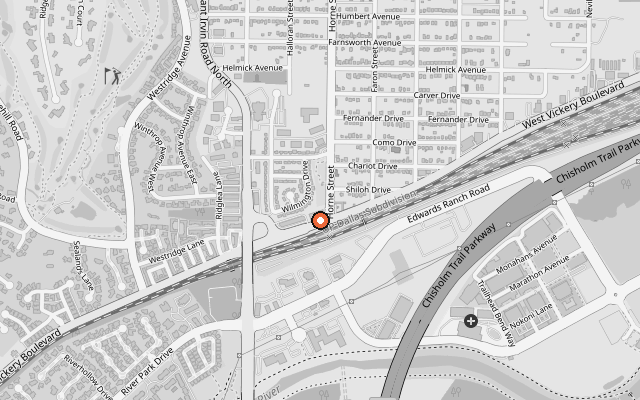
WLF Club runs that read out of one building in Fort Worth, TX, at 5724 W Vickery Blvd, pairing hands-on chiropractic and rehab care for whatever's actually restricted with a rehab progression that rebuilds control through the neck, the mid-back, and the shoulder blade, not just the joint that's loudest about it. If you're searching for a shoulder pain chiropractor near you in Fort Worth because the last approach only worked for a few weeks, that's usually the gap: the plan addressed the shoulder and stopped there.
Frequently asked questions
QWhy does my shoulder hurt if I didn't injure it?
A lot of shoulder pain builds up gradually rather than starting with an injury. If the neck, mid-back, or shoulder blade isn't moving the way it should, the shoulder often ends up compensating for it during everyday reaching and lifting, and that extra load is what eventually shows up as pain.
QCan a stiff neck or upper back really cause shoulder pain?
It can contribute to it. Research on shoulder blade function notes that a rounded upper back and a forward neck posture change where the shoulder blade sits at rest, which changes how the shoulder moves through the day. That doesn't mean posture is the only cause, but it's a real piece of the picture worth checking.
QWhat does it mean if my shoulder blade isn't moving right?
It usually means the shoulder blade isn't rotating, tilting, or gliding the way it should as your arm lifts, which changes the space your tendons have to move through. The arm often compensates by working through a pinched or strained position instead.
QWhen should I see a doctor instead of a chiropractor for shoulder pain?
See a doctor first if the pain followed a fall or accident, if the joint looks deformed, if you can't move your arm away from your body, if you have sudden weakness or numbness, or if shoulder pain shows up with chest tightness or trouble breathing. Those are signs a physician needs to look at it before anything else.
QWhy did my shoulder pain come back after it got better?
If care addressed the sore spot but not what was making the shoulder compensate in the first place, the same load returns once you're back to normal activity. The pain usually comes back in the same spot, under the same motion, until the actual driver gets addressed.
QHow does a shoulder pain chiropractor in Fort Worth figure out what's actually wrong?
By looking at how the neck, mid-back, and shoulder blade move together, not just the joint that hurts. That assessment is what separates a shoulder that needs direct care from a shoulder that's healthy but compensating for something else nearby.
This article is for education, not medical advice, and it isn't a promise of a specific result. Talk with a qualified provider about your situation before changing your training or health plan.
Sources: MedlinePlus · NIH/PMC · Mayo Clinic. Every citation links to the original source above.