
Ask five people whether you need a personal trainer and you will get five confident answers. Half say a coach is the only way anything changes. The other half say a trainer is a subscription you do not need, and a good program plus real consistency gets you just as far. Both camps are partly right, which is what makes personal training Fort Worth such a genuinely confusing search. The honest answer is not a rule that applies to everyone. It depends on where your training already stands and whether the thing holding you back is knowledge, structure, or just showing up.
WLF Club sees both kinds of people walk through the door. Some have trained on their own for years and are doing it well. Others have run the same program since college and wonder why nothing changes anymore. The difference is rarely willpower. It is whether the plan still matches the body running it.
A coach does not make you stronger by being present. A coach makes sure the effort you are already willing to put in does not get spent on the wrong exercises, a program that stopped fitting your body months ago, or form that quietly breaks down when you get tired. If none of those three things is currently true for you, you may not need one yet.
What personal training actually buys you
A personal trainer's actual job is narrower than the marketing around it suggests. Cleveland Clinic's overview of what a personal trainer does describes the role as building a program around your current ability, teaching the exercises and equipment, and adjusting the plan around injuries, pain, or health conditions instead of running everyone through the same template. Read Cleveland Clinic's overview of what a personal trainer does. That is accountability, technique correction, and program design. Three specific things, not a vague promise of motivation.
None of those three things require a coach forever. Plenty of people need help setting the plan and correcting form for a stretch, then are capable of running it themselves once it is dialed in. That is a normal use of coaching, and why WLF builds programs around an assessment first, so the coaching solves the actual gap instead of turning into a subscription nobody ever reassesses.
When going it alone is the right call
There are real cases where structure from a coach adds very little, and pretending otherwise turns this into a sales pitch instead of an honest answer.
- You are already consistent and still progressing. If your lifts, your mileage, or your mobility keep improving on the plan you are running, a coach cannot improve on something that already works.
- The goal is simple. Staying active, holding onto the strength you already have, or just moving most days of the week does not need a program built by someone else.
- Budget is a real constraint. A handful of solid sessions to build a program, then running it yourself for months, is a legitimate path, not a compromise.
- You train better without someone watching. Some people lose motivation the moment another person is standing over the set. If that is you, a rigid coached structure can work against you instead of for you.
None of these are reasons to avoid ever working with a coach. They are reasons a coach is not the thing missing from your training right now.
What the research actually shows
Whichever path you pick, the baseline does not move. The CDC's guidance on adding physical activity calls for 150 minutes of moderate-intensity activity and at least two days of muscle-strengthening work every week, for every adult, coached or not. Read the CDC's guidance on adding physical activity as an adult. That target stays the same whether someone is standing next to you or not.
The more specific question, whether supervision changes results, has been studied directly. A systematic review and meta-analysis of supervised versus unsupervised exercise in older adults, pooling 34 studies and more than 2,800 participants, found a real but modest edge for supervised training on measures like knee extension strength, and only that strength measure held up once weaker studies were set aside. Attendance rates were close to identical between groups, around 81 percent either way, and the review concluded unsupervised training can be a legitimate, lower-cost option when supervised training is not practical. Read the review on supervised versus unsupervised exercise. That study looked at older adults specifically, the population this question gets studied most carefully, and it points the same direction as the cases above: coaching helps, it just does not help as much as either side of the debate usually claims.
Where going it alone quietly breaks down
The cases above assume the basics are covered: no pain that has gone unevaluated, and a program that actually gets reassessed. Going solo tends to break down quietly in three situations.
The first is pain trained around instead of looked at. A nagging ache that never gets evaluated usually means the same movement pattern keeps loading the same spot, a different problem than needing more discipline. The second is a plateau that has lasted months with no real change to the program, usually meaning nobody is checking whether the plan still fits the body running it. The third is form that holds up early in a set and falls apart by the last rep, since fatigue is exactly when technique errors get expensive. A second set of eyes exists mainly to catch that third one before it becomes an injury instead of just a rep.
A quick way to tell which side you are on
Ask yourself three honest questions before deciding. Is the program you are running actually still working, or has progress stalled without you changing anything about it. Is there a pain point or an old injury in the mix that has never been assessed. And picturing the next six months, does the plan run on its own, or does it need someone checking in regularly to hold together. Two or three honest answers usually make the decision for you.
Personal training in Fort Worth: how WLF builds the plan
WLF's approach starts with the same read no matter which path someone ends up on. An assessment comes first, movement, recovery, and current training history, before anyone gets handed a program or a coach. If the read shows a person is already running things well on their own, we say so, rather than sell personal training to someone who does not currently need it.
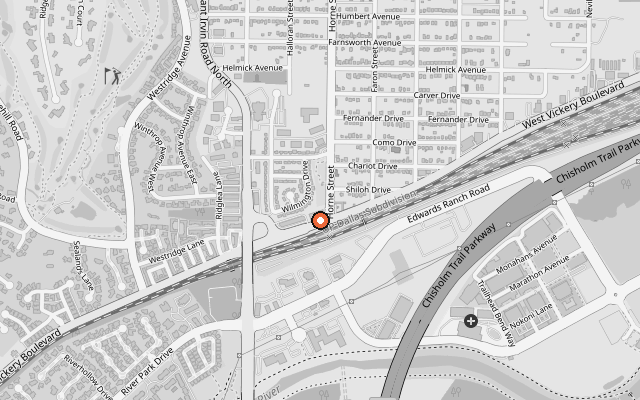
When coaching is the right fit, it lives inside WLF Club's performance training at 5724 W Vickery Blvd in Fort Worth, TX, alongside tools like ARX adaptive resistance training for a short session with a built-in coach in the room. If you are searching for a personal trainer near you in Fort Worth because your plan has stopped moving the needle, that is exactly the type of gap an assessment is built to find, the same read behind why we wrote that a program that is never reassessed quietly stops working.
Frequently asked questions
QIs personal training in Fort Worth worth it if I already stick to a routine?
Not necessarily. If the program you are running keeps producing progress, a coach cannot improve on something that already works. Personal training tends to help most when a plan has stalled, an old injury needs to be worked around, or nobody is checking whether the program still fits.
QCan I get real results training on my own, without a coach?
Yes, for a lot of people. The baseline guidance from the CDC, 150 minutes of moderate activity and two days of muscle-strengthening work a week, applies whether or not anyone is coaching you, and research on supervised versus unsupervised training found only a modest edge for supervision, mostly on strength measures.
QWhat does a personal trainer actually do that following a plan online does not?
A trainer builds the program around your current ability, corrects your form in real time, and adjusts the plan around injuries or health conditions instead of following a generic template. That is accountability and technique correction, not something automatic just from having someone watch you.
QHow do I know if I need a personal trainer instead of training solo?
Three signals are worth paying attention to: pain that gets trained around instead of evaluated, a plateau that has lasted months without any change to the plan, and form that holds up early in a workout but breaks down by the last few reps.
QIs training with a coach safer than training alone?
A coach is positioned to catch form breaking down under fatigue before it turns into an injury, which is one real safety advantage. That said, research comparing supervised and unsupervised training found comparable attendance and no meaningful difference in adverse events between the two groups.
QHow does personal training work at WLF Club in Fort Worth?
It starts with an assessment, not a sales pitch. WLF Club reads your current training, recovery, and any pain history first, then recommends personal training only when the read actually points to a coaching gap, not by default.
This article is for education, not medical advice, and it isn't a promise of a specific result. Talk with a qualified provider about your situation before changing your training or health plan.
Sources: Centers for Disease Control and Prevention · Cleveland Clinic · PubMed Central. Every citation links to the original source above.