
You're fifty-four, and your knee has an opinion about stairs now. Your shoulder needs a running start before it goes overhead. The easy explanation is the one everybody reaches for: you're getting older, and this is what getting older feels like. That's not a foolish guess. Some of what's happening in that knee or that shoulder really is age-related, and research on people with zero pain shows the exact same changes. But joint pain in Fort Worth is not just aging. Writing off every ache to a birthday misses the part that's actually mechanical, which is usually the part you can do something about.
Two people can be the same age, with a nearly identical joint on a scan, and have completely different mornings. One gets up and goes. The other can't get off the couch without wincing. Age alone doesn't explain that gap. What usually does is how the joint has been loaded for years: what's gotten stiff, what's gotten weak, and what nearby joint has quietly been covering for it.
Age-related change is real, and it shows up on scans of plenty of people who feel completely fine. What decides whether it hurts today isn't your birth year. It's how the joints around it have been loaded, and whether anything nearby has been compensating long enough to run out of room.
Why joint pain is not just aging in Fort Worth
Walk into most conversations about a stiff hip or a cranky knee after forty and the conversation stops at age. That's a shortcut, not an answer. Age is one input into how a joint holds up, alongside how much it's been used, how it's been loaded, and whether anything around it has been compensating for years. Two of those inputs are things a real assessment can look at. Your birth year is not one of them.
Plenty of people in Fort Worth in their forties, fifties, and sixties are still lifting, golfing, and keeping up with their kids without a joint slowing them down. The gap between that group and the group nursing a knee usually isn't ten more birthdays. It's what's been asked of that joint, and what's been covering for it.
What imaging finds in people who don't hurt at all
The clearest evidence that age and pain aren't the same story comes from imaging research, not opinion. Researchers who reviewed scans of people's spines who had zero back pain found degenerative changes turning up constantly, and getting more common with every decade of life. A systematic review published in the American Journal of Neuroradiology found disk degeneration on scans of 37% of pain-free 20-year-olds, rising to 96% of pain-free 80-year-olds. Disk bulges followed the same pattern: present in 30% of pain-free 20-year-olds and 84% of pain-free 80-year-olds.
That doesn't mean the changes are meaningless. It means a scan showing age-related wear doesn't automatically explain why something hurts, or why it hurts now instead of five years ago. The researchers concluded that many of these imaging findings are a normal part of aging and aren't tied to pain on their own. If a joint that looks the same on a scan can belong to someone who's pain-free, something besides the scan decides who actually hurts.
Osteoarthritis is not simple wear and tear
Osteoarthritis is the condition most people picture when they think "aging joint," and even the research on it pushes back on the wear-and-tear story. The National Institute of Arthritis and Musculoskeletal and Skin Diseases states plainly that osteoarthritis does not happen because of simple wear and tear on the joints. Age is one factor that makes it more likely, alongside extra weight, a past joint injury or surgery, repetitive movement, and how a joint happens to be built.
That list matters because most of it is workable. You can't change your birthdays. You can change how a joint moves, how strong the muscles around it are, and whether an old injury ever actually got rehabbed instead of just quieting down.
The mechanical part: load, not your birthday
Here's the part that usually gets skipped. A joint rarely hurts simply because it's old. It hurts because of how it's being loaded right now, this week. A hip that's lost some rotation forces the low back to twist more than it should. A shoulder blade that isn't gliding right hands the shoulder joint work it wasn't built for. None of that shows up as "age" on paper. It shows up as one joint doing two jobs.
This is why two people with nearly identical scans can need two different plans. One person's joint might genuinely need direct attention. Another might be healthy tissue paying for a hip, an ankle, or a mid-back that isn't holding up its end, a pattern covered more generally in why pain keeps coming back once it starts. Reading the joint alone, without checking what's happening around it, is how "it's just age" becomes the whole explanation instead of the starting one.
When joint pain means a doctor, not an assessment
Most joint pain that builds up gradually with age or activity is worth a real movement assessment, not urgent care. A short list of signs points the other way.
- A joint that's hot, swollen, and painful together. Cleveland Clinic lists a hot and swollen joint as needing immediate evaluation, not a wait-and-see approach.
- Joint pain that comes with a fever. That combination is a reason to see a provider, not schedule around it.
- Sudden, severe pain, or a joint that stops bearing weight or moving the way it should, rather than a familiar ache that's been building for months.
- Unexplained weight loss alongside joint pain. Losing ten pounds or more without trying, on top of joint pain, is worth a call rather than a wait.
Cleveland Clinic's overview of joint pain lists exactly these as reasons to get seen rather than wait it out. None of that describes ordinary age-related stiffness. It describes a short list of situations where the next step is a physician, not a chiropractic visit.
What a real assessment looks at instead of your age
A real assessment doesn't start by asking how old you are. It starts by asking how you move: what's stiff, what's weak, what's compensating, and what that means for the years ahead, whether that's picking up grandkids, getting back to golf, or walking down stairs without thinking about it.
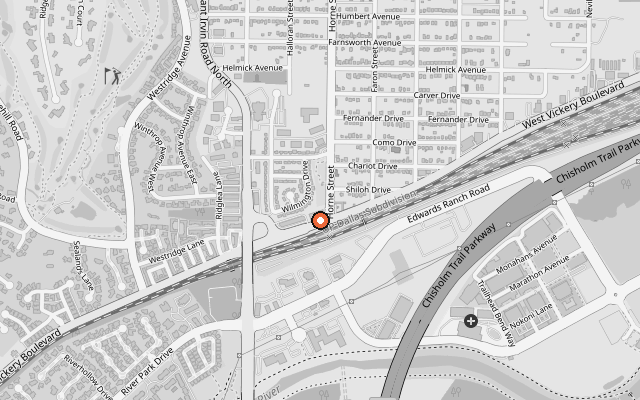
At WLF Club, a first chiropractic and rehab visit is built around that question, not a guess based on your birth year. WLF Club is at 5724 W Vickery Blvd in Fort Worth, TX, and if you're searching for a chiropractor near you because a joint has quietly gotten louder for months, a free phone consultation is where that conversation starts.
Frequently asked questions
QIs joint pain after 40 always just aging?
No. Some age-related change is real, and it shows up on scans of people who have no pain at all. Whether a joint actually hurts usually comes down to how it's being loaded and whether something nearby has been compensating for it, not simply how many birthdays you've had.
QWhy does my joint hurt now if the wear has been there for years?
Imaging changes tend to build up gradually and quietly, often with no symptoms at all. Pain usually shows up when something changes in how the joint is being loaded, not when the imaging finding first appeared. That's why a joint can look the same on a scan for years before it starts hurting.
QDoes an X-ray or MRI showing wear mean I need surgery?
Not on its own. Research on spine imaging found degenerative changes in a large share of people who had zero back pain, and the same logic applies broadly across joints. An imaging finding is one piece of information, not a stand-alone reason for a procedure, which is why it should be read alongside a real movement assessment.
QWhen does joint pain mean I should see a doctor instead of getting an assessment?
See a doctor rather than book an assessment if the joint is hot, swollen, and painful together, if joint pain comes with a fever, if the pain is sudden and severe or the joint stops bearing weight, or if you have unexplained weight loss along with the joint pain. Those situations call for a physician first.
QCan chiropractic care help joint pain that's partly age-related?
Chiropractic and rehab care is designed to support how a joint moves and how the muscles around it are working, which is often the part of "age-related" pain that's actually changeable. It's not a way to reverse age itself, but a real assessment can usually find the mechanical piece that's making an aging joint louder than it needs to be.
QHow does WLF Club figure out what's actually driving joint pain in Fort Worth?
By starting with how you move instead of how old you are: what's stiff, what's weak, and what's been compensating. That read is what separates a joint that needs direct attention from a joint that's healthy but paying for something else nearby.
This article is for education, not medical advice, and it isn't a promise of a specific result. Talk with a qualified provider about your situation before changing your training or health plan.
Sources: NIH/PMC · NIAMS · Cleveland Clinic. Every citation links to the original source above.